
Guanciale vs Pancetta: What’s the Difference?
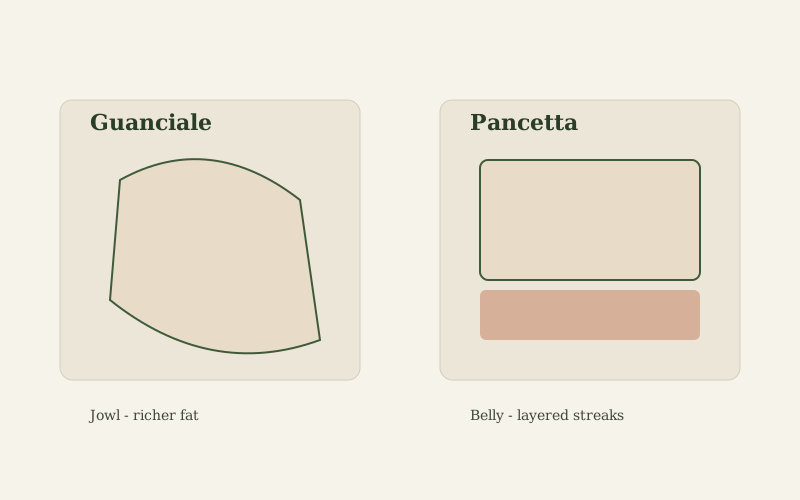
Both are Italian cured pork. The cut — and therefore the fat — is what separates them.
Side-by-side
| Guanciale | Cured pork jowl / cheek |
|---|---|
| Pancetta | Cured pork belly |
| Fat level | Guanciale is typically richer |
| Smoke | Neither is traditionally smoked |
| Roman pasta | Guanciale is the classic choice |
| Everyday swap? | Pancetta is the closest substitute |
Cut and composition
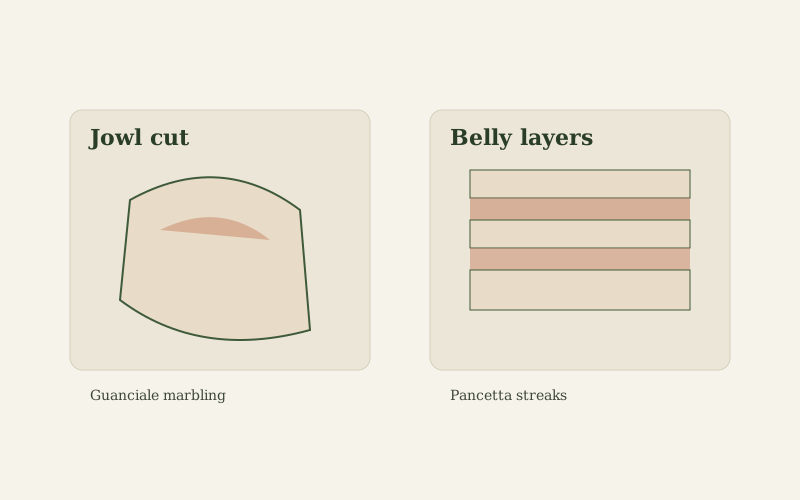
Pancetta comes from the belly, so it has alternating layers of meat and fat similar to the structure of bacon (without smoke). Guanciale comes from the jowl, where fat is more abundant and the meat-to-fat ratio skews richer.
In a pan, guanciale often yields more liquid fat and a softer, silkier finish. Pancetta can crisp more uniformly and sometimes tastes cleaner or milder.
Flavor differences
Guanciale tends to taste more intensely porky and peppery, with a luxurious fat. Pancetta is savory and cured-pork forward, but usually less dramatic. Neither should taste like American breakfast bacon.
Which should you use?
- Carbonara, amatriciana, gricia: use guanciale when you can.
- Soups, beans, greens, pizza: either works; choose by how rich you want the dish.
- If guanciale is unavailable: pancetta is the best substitute — see substitutes.
Buying tip
Read the label. Some products are labeled loosely. Confirm the cut (jowl vs belly) and whether the product is smoked. For shopping guidance, visit buy guanciale online.