
How Guanciale Is Made
Guanciale is a cured product: salt, time, air, and seasoning do the work — not smoke.
Guanciale at a glance
| Starting cut | Pork jowl / cheek |
|---|---|
| Core process | Salt cure → season → air-dry |
| Common seasoning | Black pepper; sometimes chili, herbs, garlic |
| Smoked? | Traditionally no |
| Result | Firm cured meat with rich, renderable fat |
1. Select the jowl
Producers start with pork cheek/jowl, trimmed to a workable piece with a good balance of meat and fat. Quality of the raw cut shows up later in how cleanly the fat renders.
2. Salt cure
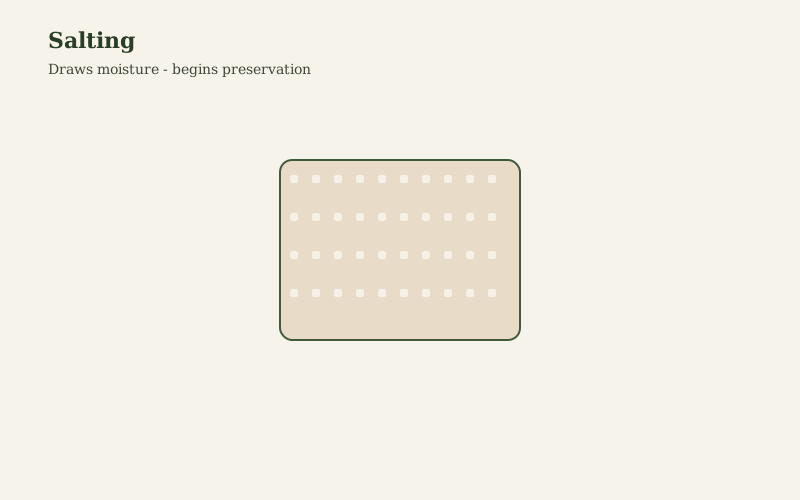
The jowl is packed or rubbed with salt. Salt draws moisture out and begins preservation. This stage can last days depending on thickness and producer method.
3. Season the exterior
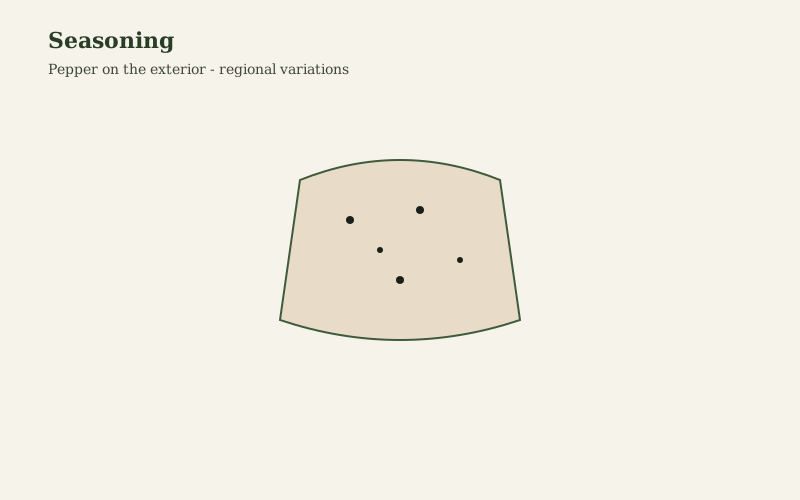
After the initial cure, the surface is typically coated with cracked black pepper. Some styles add chili, rosemary, or other aromatics. “Amatriciano” associations often point to mountain curing traditions around Amatrice and Lazio.
4. Air-dry and age
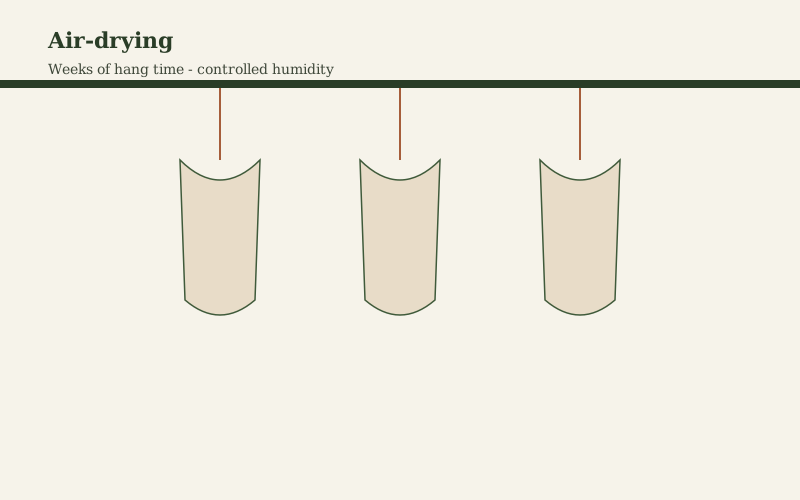
The seasoned jowl hangs in controlled conditions to dry and mature. Moisture drops, flavor concentrates, and the texture firms. Time varies by producer, climate, and desired style.
Why smoking is not the classic path
Guanciale’s identity is cured and dried pork jowl. Smoking creates a different product — closer to the flavor lane of many bacons. That is why Roman recipes treat guanciale and smoked bacon as different tools.
What to look for on a label
- Cut listed as jowl or guanciale
- Ingredients: pork, salt, spices (and curing agents where used)
- No smoke claim if you want traditional flavor
- Origin or style notes (e.g., Italian, amatriciano-style)
Shopping help: buy guanciale online.